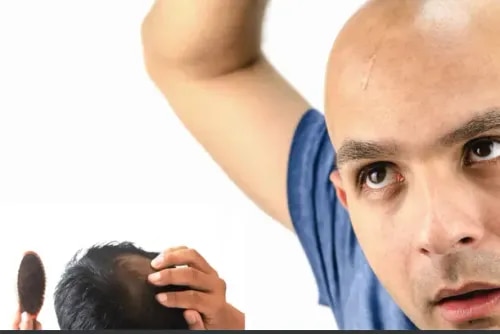
Acupuncture for hair loss treatment service image
Acupuncture for hair loss treatment

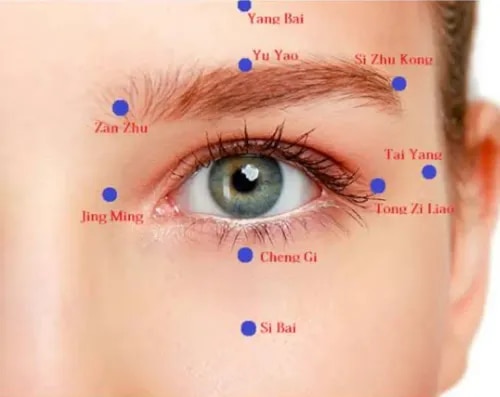
Acupuncture for hair loss treatment Acupuncture is an alternative medical therapy. Popularized thousands of years ago in China, acupuncture has been used for centuries to treat a variety of ailments and ills, from back pain to headaches. In traditional acupuncture, your health depends on a good qi, an energy-giving life force that flows through your body. When your qi is blocked, you may become sick. Acupuncture helps restore a healthy energy flow by releasing those roadblocks. During an acupuncture session, a practitioner stimulates specific points on your body with very fine needles. These spots correspond to the symptoms you’re trying to treat. Acupuncture sometimes gets credit as a treatment for a wide variety of ills — some warranted, some not. Research does back up acupuncture proponents’ claims in a few treatment areas, specifically relieving low-back pain and neck pain. In other areas, such as hair loss, the research is less conclusive. Still, there’s some evidence to suggest acupuncture might be useful for at least one type of hair loss. Acupuncture for male pattern baldness No research supports the use of acupuncture to treat male pattern baldness. Male pattern baldness is often the result of genetic factors and hormonal changes. Acupuncture is unlikely to affect these conditions. In one study, however, researchers did find that acupuncture is sometimes better than medicine for the treatment of another type of hair loss: Alopecia areata. Alopecia areata occurs when your body’s immune system attacks your hair follicles. The follicle attacks lead to hair loss, often in small patches all over your scalp. It’s unclear why acupuncture is effective at treating this condition. It may be related to increased blood flow and improved circulation in the skin, a common benefitTrusted Source of acupuncture. That could help stimulate hair follicles, nerves, and blood vessels so the hair loss will stop. Then, regrowth may begin again with additional treatment. Acupuncture for hair loss in females Female pattern hair loss, a common type of hair loss in women, is also the result of genetic factors and changes in hormones. Here again, research does not support the use of acupuncture to treat hair loss in women. However, women experiencing alopecia areata may see improvement in hair loss and regrowth with the use of acupuncture. The tiny needles may help stimulate the scalp and improve the chances of hair returning.
Irritable Bowl Syndrome IBS and Acupuncture treatment  service image
Irritable Bowl Syndrome IBS and Acupuncture treatment

Irritable bowel syndrome (IBS) is a common gastrointestinal condition that isn’t completely understood. Some people with IBS have found that acupuncture helps to relieve IBS-related symptoms. Others have found no relief with this treatment. The research on acupuncture for IBS is mixed, as is the anecdotal evidence. If you have IBS and are considering acupuncture, here’s what you need to know. How does acupuncture work? Acupuncture is an ancient healing practice that comes from traditional Chinese medicine (TCM)Trusted Source. Practitioners of acupuncture insert hair-thin needles into specific acupuncture points on the body to release blocked energy and correct imbalances. These acupuncture points correspond to and stimulate the body’s internal organs. A possible explanation for why acupuncture works is that needling acupuncture points helps stimulate the nervous system, releasing feel-good chemicals and hormones. This may reduce the experience of pain, stress, and other symptoms. Opening channels might be working at a quantum level, enhancing the flow of energy between cells. acupuncture relieve symptoms of IBS? IBS symptoms vary and may include: diarrhea constipation stomach pain or cramping gas enlarged stomach and bloating mucus in stool The ability of acupuncture to alleviate these symptoms has been the focus of many studies, with mixed results. the researchers who wrote the analysis concluded that acupuncture could significantly improve quality of life for people with IBS. Benefits were seen for symptoms such as abdominal pain. A small studyTrusted Source that compared abdominal acupuncture to traditional Western medication found acupuncture more effective at alleviating symptoms such as diarrhea, pain, bloating, stool output, and stool abnormality. Anecdotal evidence among some IBS users is also mixed. Many people swear by acupuncture, and others find no evidence that it helps.

Acupuncture Therapy for Pain  service image
Acupuncture Therapy for Pain

Acupuncture is a form of alternative medicine and a component of traditional Chinese medicine in which thin needles are inserted into the body. Acupuncture is a pseudoscience; the theories and practices of TCM are not based on scientific knowledge, and it has been characterized as quackery The theory and practice of acupuncture originated in China. It was first mentioned and recorded in documents dating a few hundred years before the Common Era. Earlier instead of needles sharpened stones and long sharp bones were used around 6000 BCE for acupuncture treatment. What Is Acupuncture? Acupuncture is an age-old healing practice of traditional Chinese medicine in which thin needles are placed at specific points in the body. It's primarily used to relieve pain but also has been used to treat other conditions. More than 3 million Americans use acupuncture, but it is even more popular in other countries. In France, for example, one in five people has tried acupuncture. How Acupuncture Works ? Acupuncture seeks to release the flow of the body's vital energy or "chi" by stimulating points along 14 energy pathways. Some scientists believe that the needles cause the body to release endorphins -- natural painkillers -- and may boost blood flow and change brain activity. Skeptics say acupuncture works only because people believe it will, an effect called the placebo effect. Does Acupuncture Hurt? Acupuncture needles are very thin, and most people feel no pain or very little pain when they are inserted. They often say they feel energized or relaxed after the treatment. However, the needles can cause temporary soreness. Acupoint: Low-Back Pain If standard treatments don't relieve your chronic low-back pain, acupuncture may do the job, and two respected medical groups suggest that people in this situation give it a try. One large study found that both actual and acupuncture worked better than conventional treatments for back pain that had lasted more than three months. The jury's still out on acupuncture for short-term (acute) pain in the low back. Acupoint: Headaches Acupuncture help relieve migraines or tension headaches. Two large studies found that people receiving acupuncture had fewer days with tension headaches than those receiving conventional care. Acupoint: Arthritis Pain Acupuncture can be a helpful addition to conventional treatment for osteoarthritis, says the National Institute of Arthritis and Musculoskeletal and Skin Diseases. And some of the most promising, early research has shown acupuncture eased arthritis pain in the knee. However, more research is needed to prove without a doubt that it's effective for osteoarthritis. Acupoint: Carpal Tunnel Syndrome Acupuncture was tested and compared with steroid pills for the hand and arm pain of carpal tunnel syndrome. Researchers in Taiwan gave one group eight acupuncture treatments, over about a month, and those patients reported more relief, for a longer time, than the group taking medicine. While studies like this have been promising, more evidence is still needed to confirm that acupuncture is effective for carpal tunnel syndrome. Acupoint: Other Pain People have tried acupuncture for neck pain, muscle pain, tennis elbow, and menstrual cramps, hoping to avoid medications and their side effects. The World Health Organization lists 128 different conditions that are sometimes treated with acupuncture. In the U.S., a review by the National Institutes of Health called for robust research to verify the promise that acupuncture holds for many different conditions.

Paralysis & Bellspalsy Acupuncture Treatment  service image
Paralysis & Bellspalsy Acupuncture Treatment

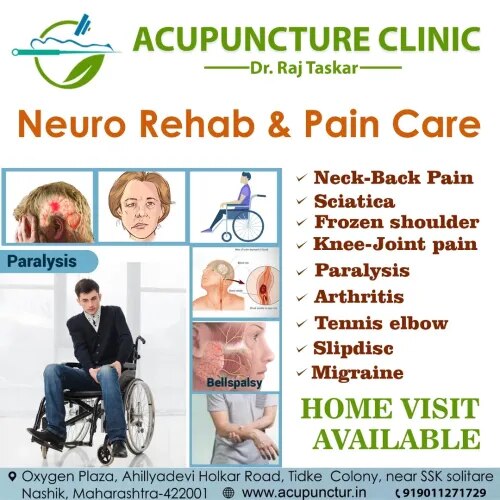
Acupuncture Therapy helps to regain muscle movement with advanced paralysis treatment by working on the damaged brain tissue, as brain stroke is the main cause of paralysis. Brain stroke happens due to Infract or Haemorrhage in which brain tissue gets damaged and results in complete or partial loss of muscle movement. We helps to recover the damaged brain tissue and increase Neuroplasticity (a healing process of the brain), to improve the paralysed condition of the patients. Normally most of the paralysis patient consider allopathic medicines and physiotherapy for their Paralysis treatment, but if you evaluate the treatment, you will only find medicines for ailments like High Blood Pressure, Diabetes, Cholesterol and general weakness and physiotherapy works only on muscle level. In both types of treatments, nothing has been done to improve brain function, which results in non-improvement in paralytic condition due to Brain stroke. KNOW MORE ABOUT PARALYSIS Paralysis is a loss of strength and control over a muscle or group of muscles in a part of the body. Not primarily, muscles themselves are the cause, as this could also be due to a problem somewhere along the chain of nerve cells that runs from the body part to your brain and back again. The work of these nerve cells is to deliver the signal for your muscles to move. There are many types and degrees of paralysis. The condition can be: Partial, when you still have some control of your muscles (sometimes called paresis). Complete, when you can’t move your muscles at all. Permanent, when muscle control never comes back. Temporary, when some or all muscle control returns. Flaccid, when the muscles get flabby and shrink. Spastic, when the muscles are tight and hard and jerk around oddly (spasm). Immobility can happen in any part of the body. If it is limited to a particular part of the body, it is localized or generalized when a wider area of the body is affected. Generalized paralysis is broken down based on how much of the body is paralyzed: Monoplegia. It affects one limb only, such as one arm or one leg. Hemiplegia. The damage can spread to one side of the body, such as the leg and arm of the same side of the body. Diplegia. This form of paralysis affects the same area on both sides of the body, such as both arms or both sides of the face. Paraplegia. It influences both legs and sometimes parts of the trunk. Quadriplegia. The damage could be on both arms and both legs and sometimes the entire area from the neck down.

Subcategory Tags

iAcuHair LossHijamaacupressureacupunctureacupuncturistbellspalsycuppingdetoxificationfrozen shoulderjpain Treatmentpain reliefparalysistherapy

Contact Us

Live Chat

Connect over WhatsApp to resolve your queries realtime.